


LGBTQ+ Euro Handball Championship 2024

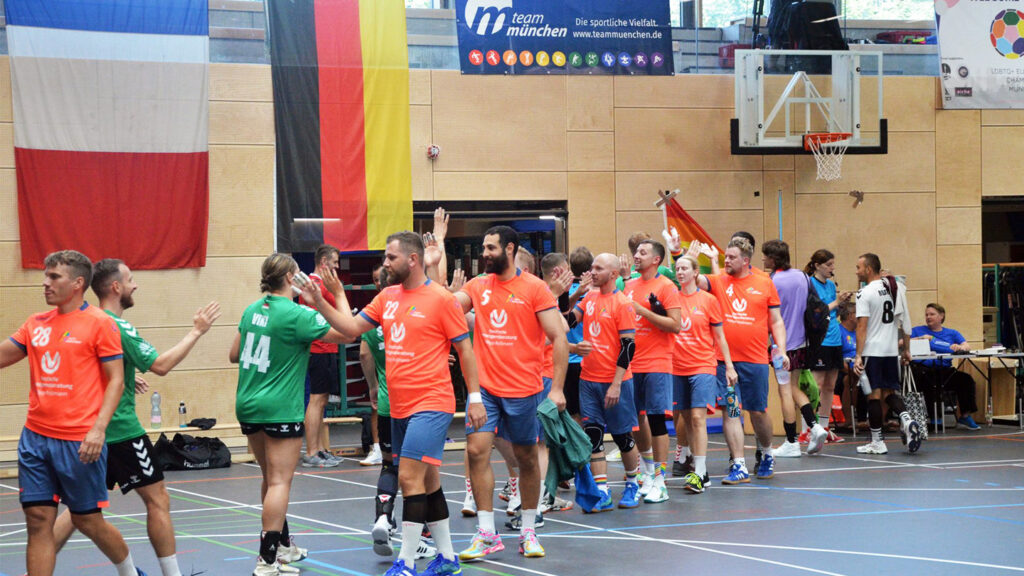
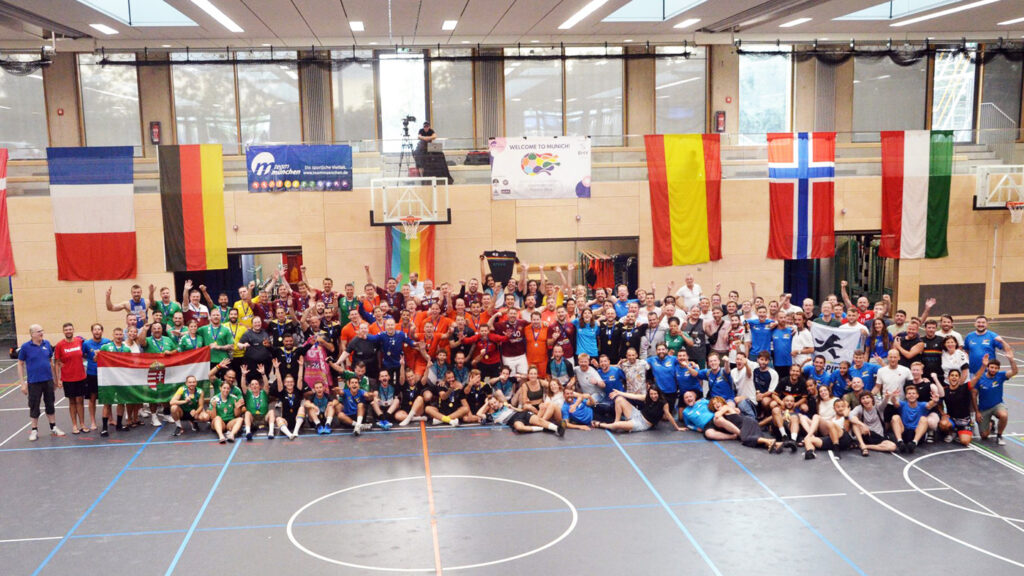
From 14 to 17 August 2024, Team Munich hosted one of the largest LGBTQ+ individual sports tournaments of the past 20 years in Munich: the Euro Handball Championships. Over 230 participants with teams from Norway, Denmark, the Netherlands, France, Spain, Hungary and Germany took part. They were looked after by 36 volunteers and the organising team from the handball division. Overall, the tournament was a huge success for everyone involved on and off the pitch. It was a great experience with lots of fun for the athletes from all over the world. The many years of organisation were absolutely worthwhile and Team Munich presented itself at a high level.
We asked the organisers of the tournament
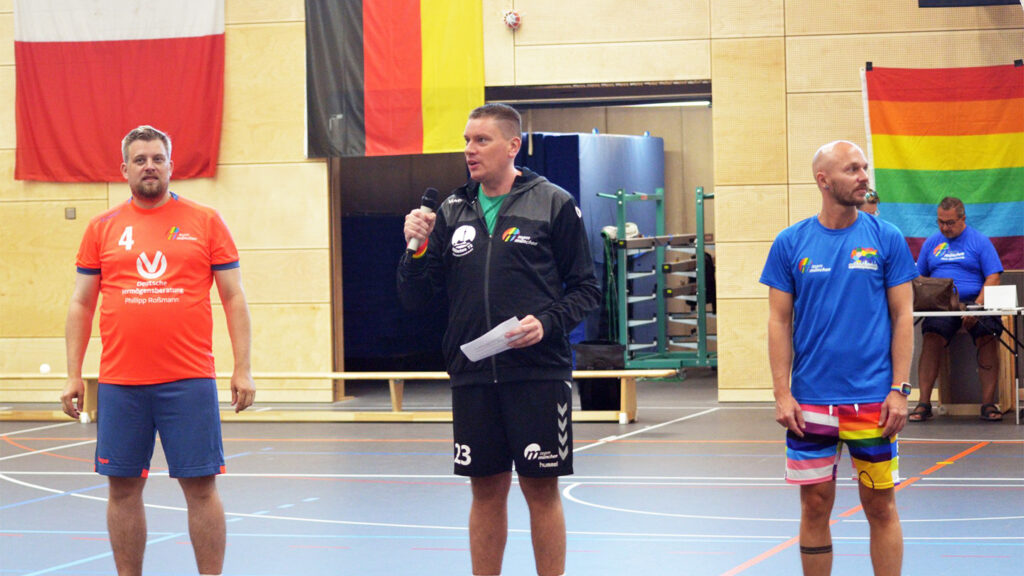
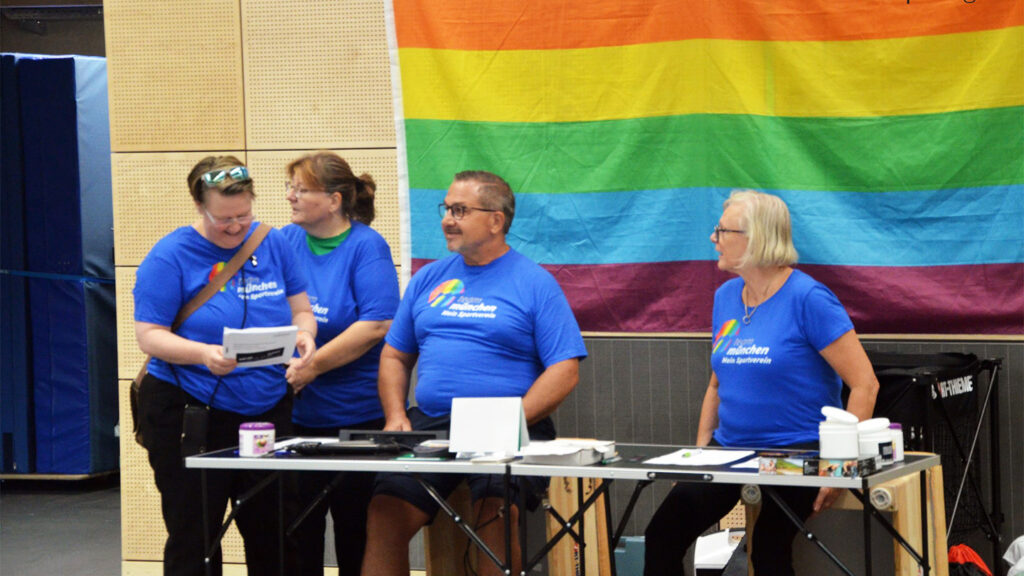
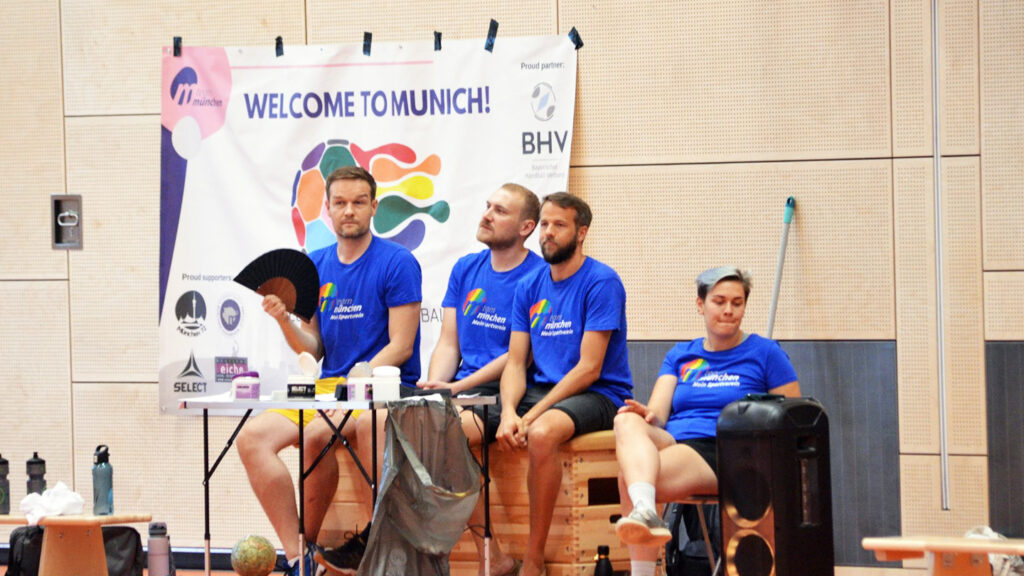
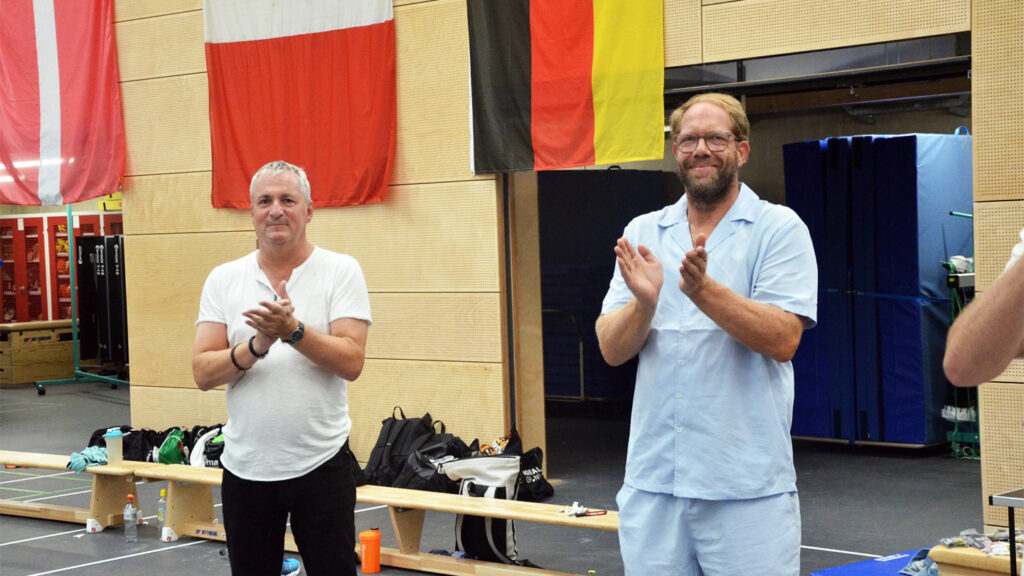
Espen, Thomas and David (from left to right)
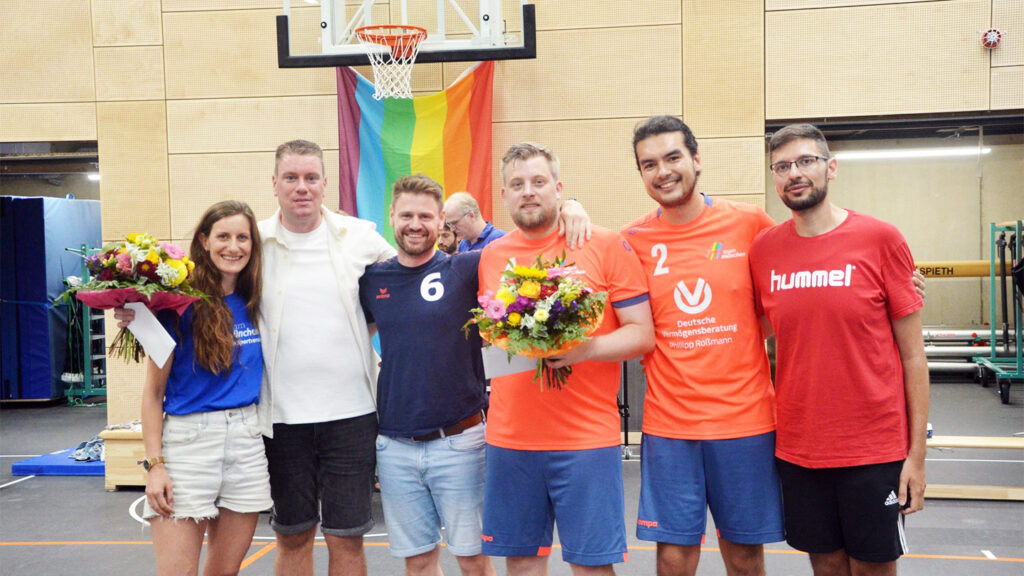
Verena (left) and other members of the organising team,
What worked particularly well within the organisation team?
Verena (co-organiser for volunteers): A main person responsible was assigned to each topic. This made it clear who felt responsible and who would drive the topic forward. This was important so that nothing came to nothing and you didn't rely on the other person to do something. Of course, you didn't have to solve all the tasks on your own; we often had small teams working on one topic. This worked well, especially considering that not every decision can be discussed in a large group, but you can reach a decision quickly as a small group. The brief agreements via small WhatsApp groups and the collection of all information and updates in Trello was also a good way of documenting.
Thomas (co-organiser): Even if we didn't agree on everything, the atmosphere in the organisation team was good the whole time and we worked well together.
Thomas: We had a few teething problems at the beginning. It's difficult and very vague to talk about what's going to happen in two years' time. We had planning dates, but they were often not very specific. We didn't really get started until January 2024, eight months before the tournament. That's when we learnt, for example, that it's very difficult to find sponsors. to find. Many companies plan 1 year in advance. So a tip for everyone: you have to start looking for sponsors and partners at least 1 year before the tournament.
Verena: At the very beginning of the planning, many of those who volunteered for the organisation team didn't realise what actually needed to be done. The tasks as such were still so vague that most of them simply did nothing at first. It helps if one or two people have a precise plan, assign specific tasks and make it clear who you can turn to if you have any questions. Once we realised this, some people also pitched in. It certainly also helped that the tournament had come closer in the meantime and was therefore more real. Admittedly, we had hoped that more people from our team would get involved in the planning so that not too much work would be left to just a few people. But this development is probably quite normal. During the tournament itself, especially during the dismantling, all team members really pitched in and pulled together.
Did you imagine the organisation of the tournament in the years before as it was in the end?
David (co-organiser): We don't think you can ever fully prepare for how much work it really is to look after 300 people over four days with a jam-packed programme. Of course, we had hoped for a great result and dreamed that everything would run smoothly, but the reality of the preparation - especially in the last eight months - surprised us. It was a lot more work than we had originally thought.
Verena: I don't think anyone expected how much work there would be and how many little things you have to think about - especially towards the end. I would like to take this opportunity to once again thank everyone who sacrificed their evenings or even weekends to complete the tasks. It was worth it!
Thomas: I think we have all learned a lot over the last two years and none of us would have thought that organising a tournament like this would take up so much time. Apart from the big things like halls, catering and the tournament schedule, of course, there are a lot of considerations and little things that all take up a lot of time. We all knew it wouldn't be an easy task, but we were surprised at how complex it was. But we also had the goal of organising the best tournament ever, and if you want to achieve such a goal, you have to work hard for it.
How many people and genders have organised or helped?
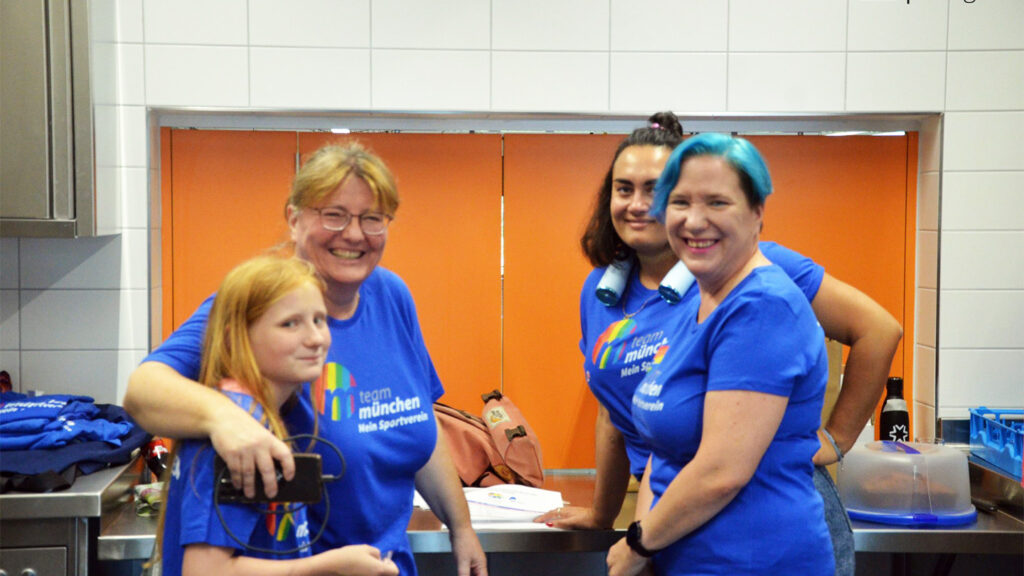
Verena: The main team consisted of around ten people, four of whom were even more intensively involved in the planning. For a tournament with almost 300 people (including players, volunteers, referees, etc.), I would recommend this number of helping hands as a minimum. At the tournament itself, 36 volunteers actively supported us so that the players could concentrate on playing. That was really fantastic and the tournament would not have been such a success without them. As we are a colourful mixed team with girls and boys, homosexuals and heterosexuals, everything was represented in the organisation team.
Was there feedback from the participants on the pre-organisation/registration process?
Espen (co-organiser): Yes, we have received consistently positive feedback from participants about the pre-organisation and the registration process. Many have praised the clarity and completeness of the information we provided in advance. We used our social media intensively to create anticipation and inform participants about all the important aspects of the tournament. This not only contributed to the excitement, but also made the participants feel well prepared.
In addition, we regularly obtained feedback from experienced team leaders with whom we worked closely over the course of the year. Their valuable feedback not only gave us confidence, but also confirmed that we were on the right track. It was helpful to learn from their experiences and integrate their advice into our planning.
Were there any sporting, organisational or other surprises at the tournament?
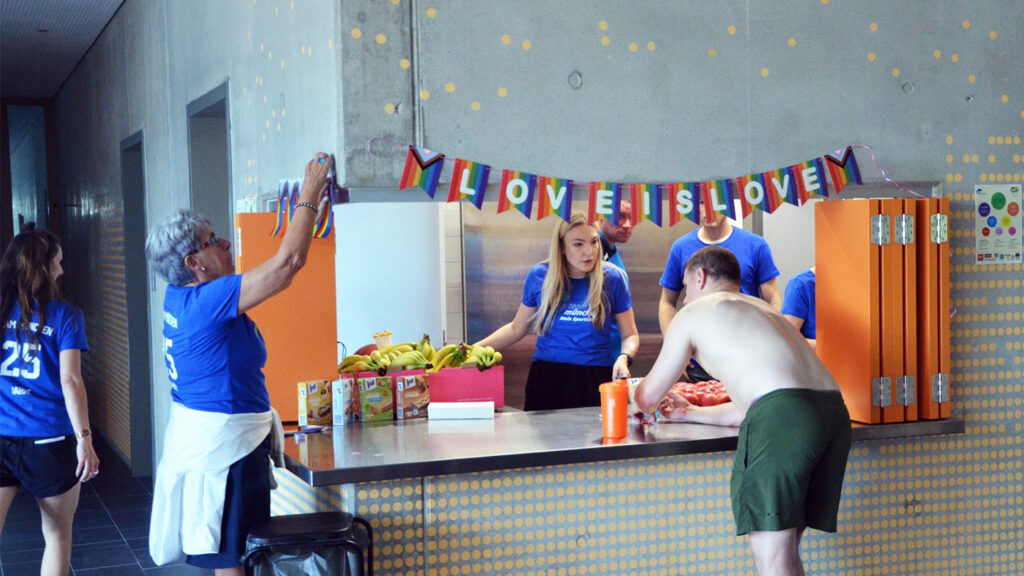
Verena: We were a little anxious at lunch: would everything be delivered on time, would there be enough for everyone, would everyone be satisfied? Fortunately, our worries were unfounded and everything went well. Here's a tip: don't just ask for vegetarian/vegan when you register, but also gluten-free or similar, so that you don't run into any problems on site.
And even before the tournament, Adele had us sweating bullets. Her concerts were announced on the same date and also in Riem, which caused hotel prices to skyrocket from one day to the next. Fortunately, most of the teams had already booked something. We were then able to organise private accommodation for a few players.
Thomas: We received a lot of praise and many teams even told us that the tournament in Munich was the best ever and a new benchmark for future tournaments. That makes us very happy and shows us that we did a lot of things right. We are proud of what we and our entire team have put together.
On the first match day, the fire alarm suddenly went off after a good hour. We had to evacuate everyone and there was chaos and confusion for a few minutes. Thankfully, the fire brigade was quickly on site and was able to determine that everything was in order and switch off the alarm. We were prepared for many things, but not for this. Nevertheless, we coped well with this and the associated delay in play.
What was the feedback from the participants? What did you like the most?
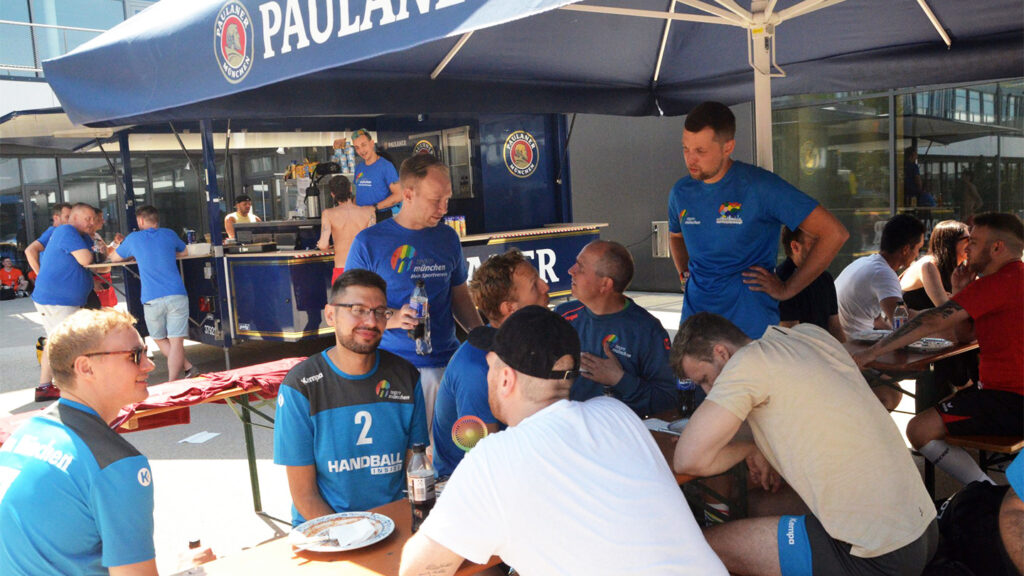
Aspen: The feedback we received from the participants was consistently extremely positive and encouraging. Numerous players approached us again during and after the tournament to tell us personally how excellent they thought the entire organisation was. The friendliness and expertise of our volunteers was also a big plus point for many. They were praised for being extremely helpful, attentive and always approachable, which contributed significantly to the pleasant atmosphere.
David: Many participants also commented that we have raised the bar for future events with this tournament, which naturally makes us proud. This kind of direct, personal praise really touched us all and made us realise once again that the many hours of intensive preparation and planning were more than worth it. It was incredibly nice to see that our hard work was so appreciated and that the participants went home with an all-round positive impression.
We are very proud of what our Planning Committee has achieved!
What worked particularly well in the tournament and what worked less well?
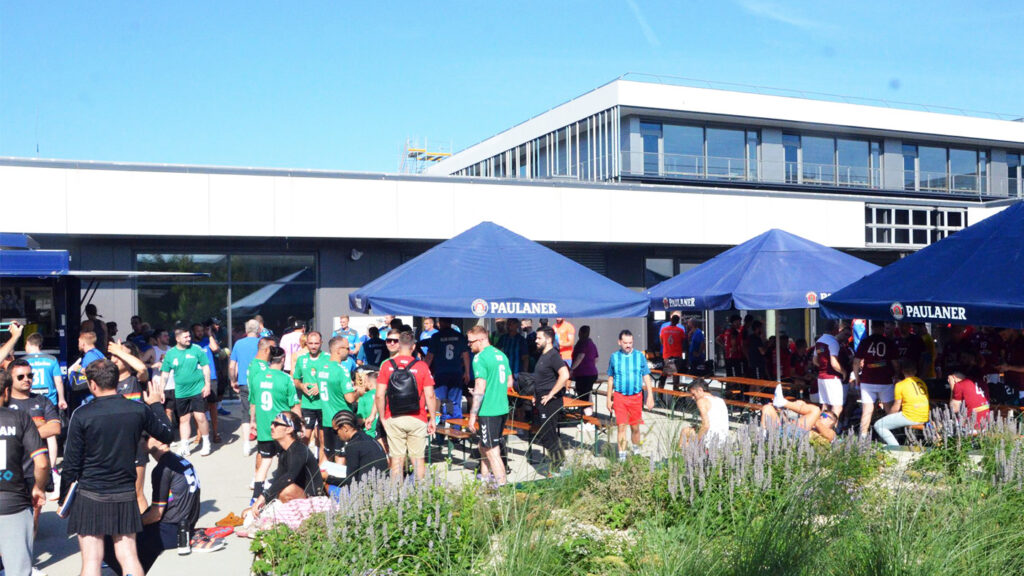
Verena: The most important factor for a smooth tournament and a good atmosphere was certainly the location. Both halls were in one building with only a short walk to the other stand. This meant that you could change quickly, you could see all the games and the good atmosphere could be maintained everywhere. You could also relax on a square in front of the building, take advantage of the drinks trolley and chat to other people.
The fact that we divided the teams into three levels after the preliminary round was also well received. This allowed everyone to play a lot, but not too much and against comparable teams, so that the fun was not lost.
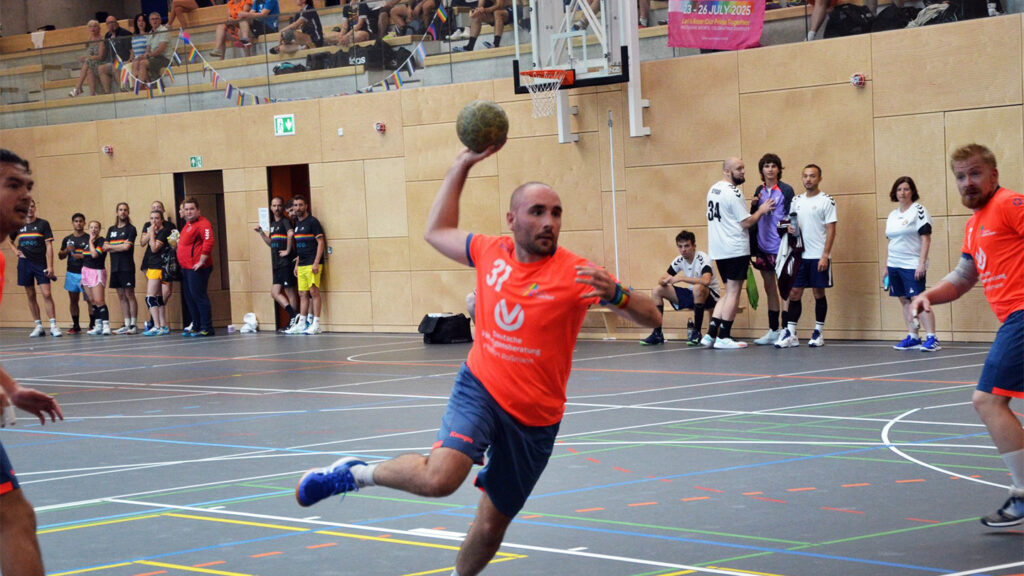
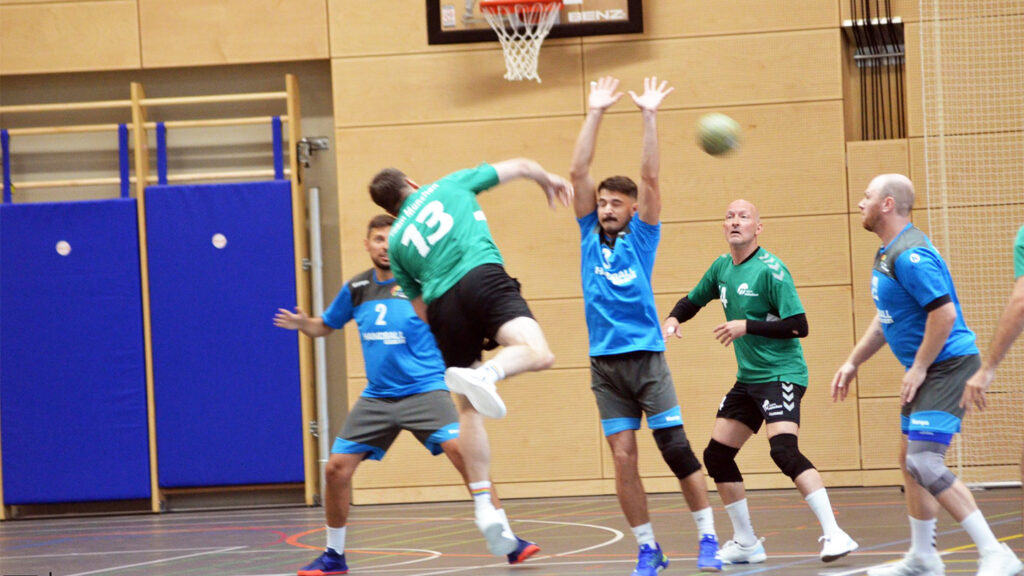
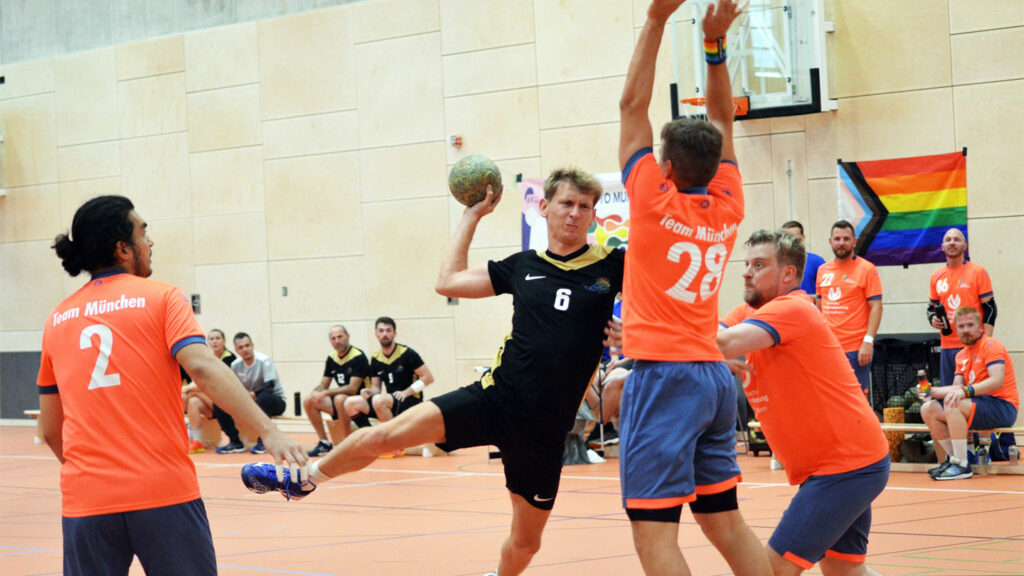
Thomas: We were very well prepared and almost everything worked well and without any problems during the tournament. But what surprised us a lot and what we had underestimated was the issue of dismantling and cleaning. The resin on the hall floor in particular took a lot of time. One of the criteria for our tournament is that we are allowed to play with resin, and we had received a special permit from the city of Munich for this and created a cleaning concept with the help of Trudering Handball. However, the resin was very stubborn and it took a good 10 people over 12 hours to get the 2 halls clean again. In retrospect, we found out that the floor material in the new halls in Riem is very sensitive and not at all suitable for resin, so our cleaning concept was not as useful as we had initially imagined.
What would you do differently next time?
Verena: We really started planning eight months before the tournament. For some topics, such as the search for sponsors, we were already too late, as expenditure is determined a year in advance. We are now passing this experience on to the organisers of future years so that they can learn from us.
I would also try to spread the tasks over more shoulders. Openly asking who else could help has proven to be difficult. I think it's better to ask for specific tasks (and importantly: with precise descriptions of what needs to be done). If no one comes forward, it's best to approach specific people directly, then you'll always find someone who will lend a hand.
Thomas: Allow more time and better planning for cleaning and dismantling.
David: The big issues such as sponsors and support from larger organisations should definitely be planned earlier. It is important to spread the responsibility over several shoulders, because for some people the workload was really enormous! However, we are very proud of what our planning committee and team members have achieved together. A huge thank you to everyone who helped in one way or another!
You finished sixth, tenth and twelfth out of 18 teams. Are you satisfied with your sporting performance?
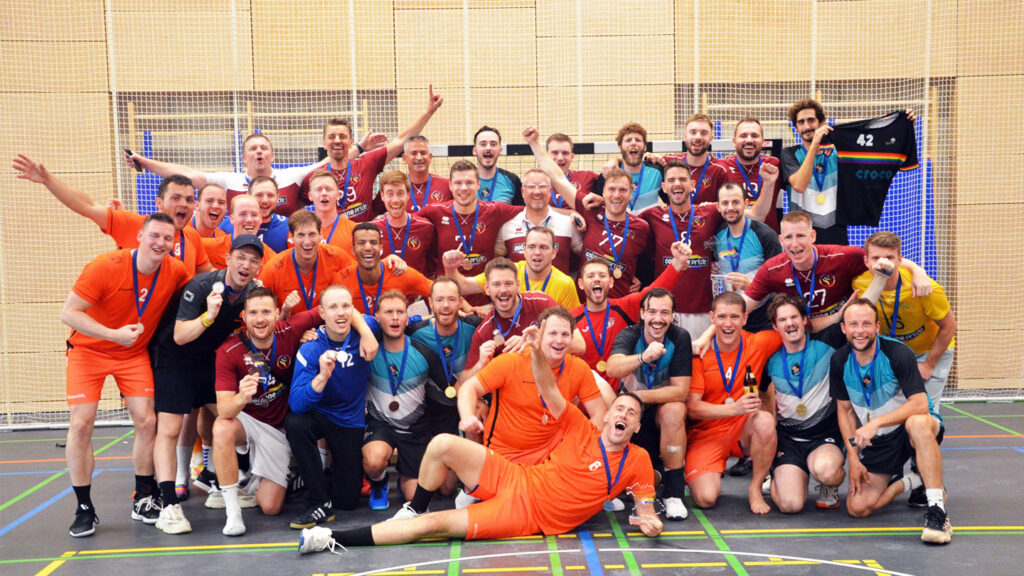
Aspen: First of all, it was most important to us that all participants had fun and were able to enjoy the tournament to the full. That was clearly our top priority. It was definitely a big plus point that we, as the organising club, had three of our own teams at the start this time. That made us very proud, as we were strongly represented both in terms of sport and organisation. We were also particularly pleased to welcome international players to our teams, which not only enriched the sporting level, but also gave us the opportunity to make new friends.
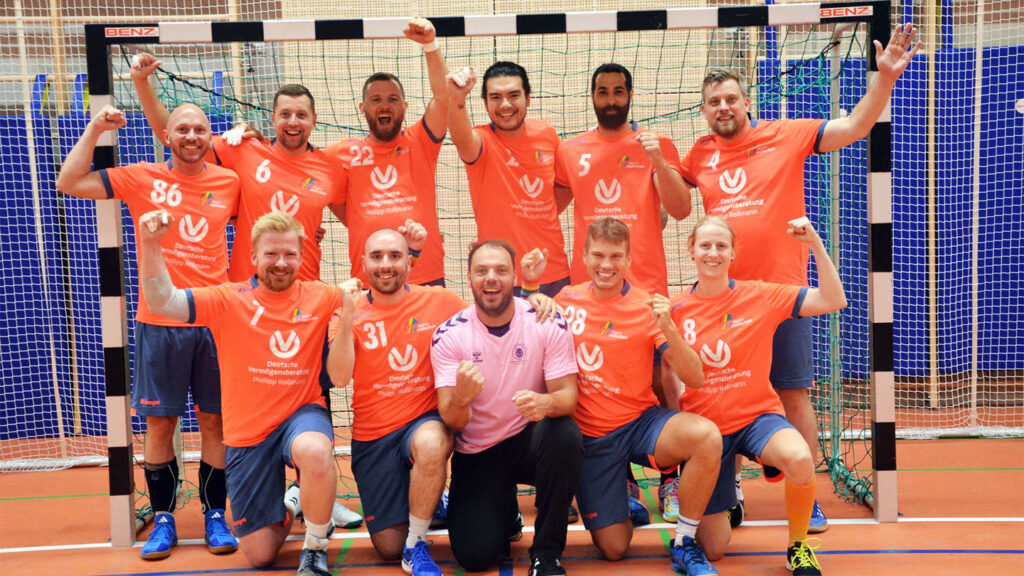
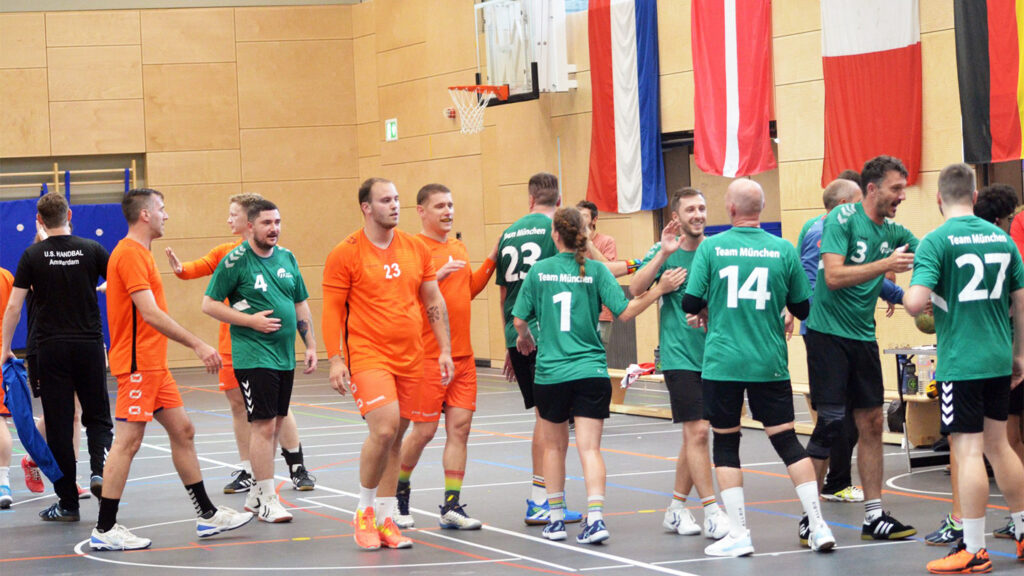
Thomas: The fact that our Team Orange was allowed to play in Group A on match day 2 and the other two teams (Blue and Green) played in Group B was a success. Team Orange in particular put in a very good performance. All teams and all 32 participants who played for Team Munich had fun and enjoyed the game and that is the most important thing for us.
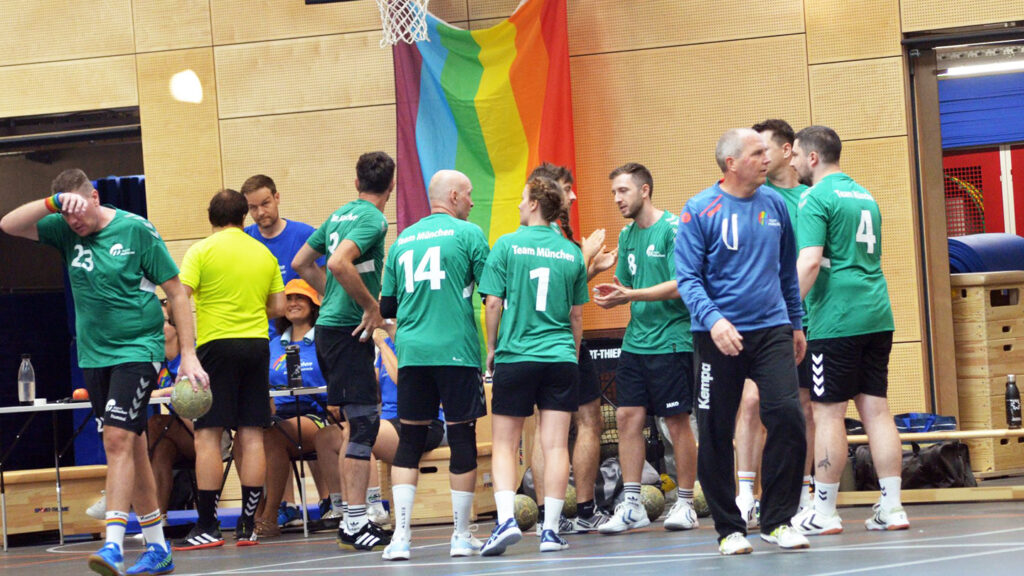
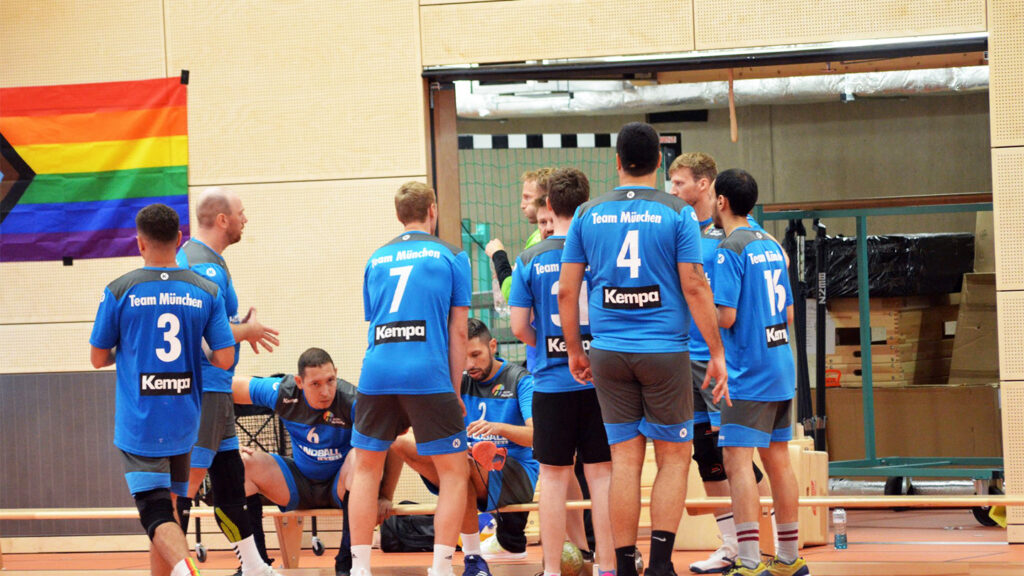
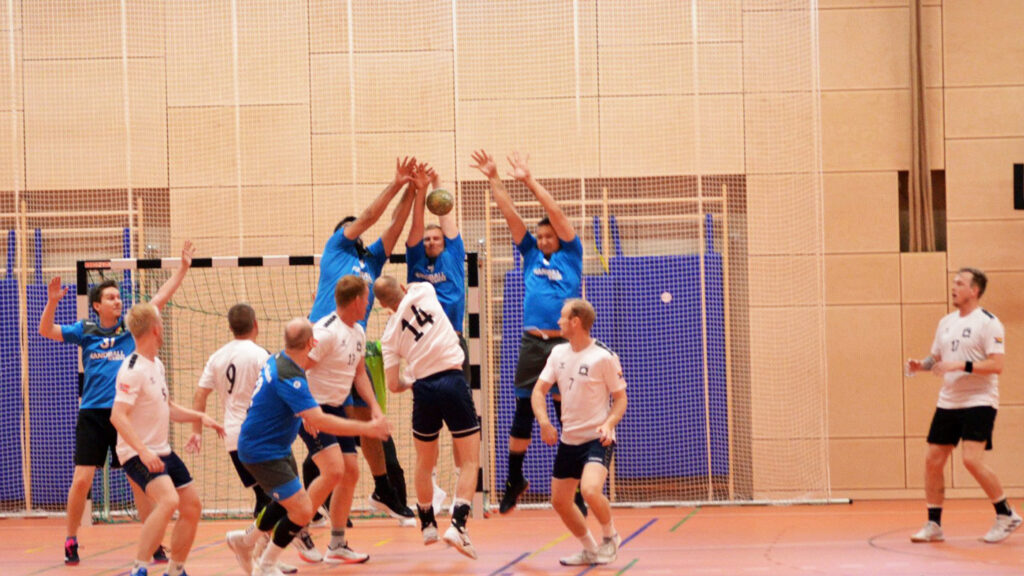
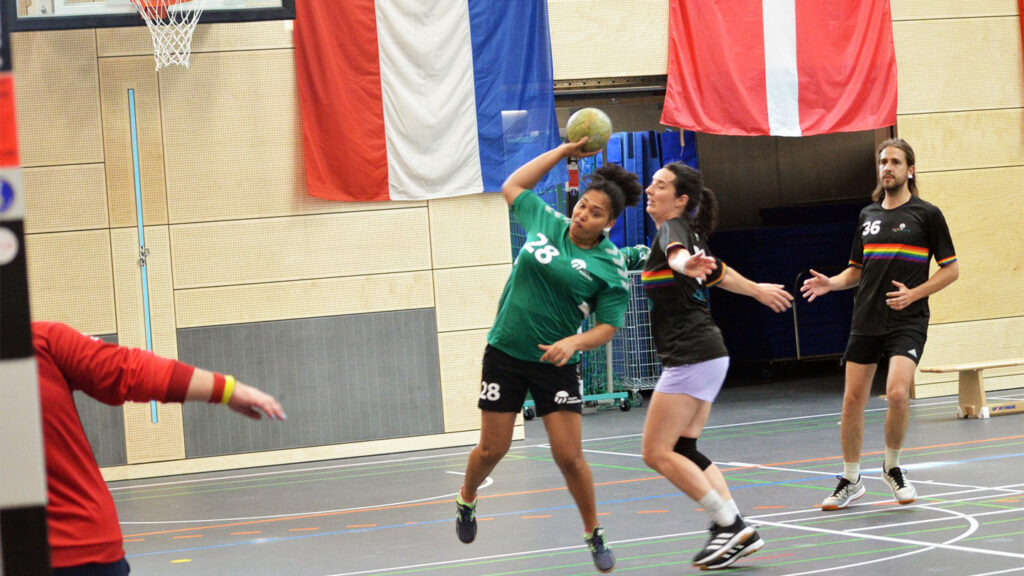
Verena: Team Blue was very mixed with players who had registered for the tournament without a team. This also worked really well and was fun to watch as they harmonised better and better. Team Green also played great games and the cheering from outside was always a great motivation for all the teams. Especially as we are not used to playing with resin and you first have to learn not to throw the ball at your team-mates' feet, we were all happy that this worked out relatively quickly and that nothing stood in the way of having fun playing.
David: In sporting terms, it was an excellent result for all three of our teams. Each team gave their best. Overall, we are very satisfied and look back positively on our sporting performance!
Thank you very much for your answers.
Chairwoman of the Bavarian Handball Association
Photos
Toni Fürth - TI-Sportfotografie


